
THIS IS iVB.
SPORT REDEFINED
Founded in 2025 by Ed Pereira, iVB Sport is a movement. Boxing was once a raw, electrifying pulse that belonged to the people. Over time, it drifted behind velvet ropes. We are bringing it back.
We are reimagining world-championship boxing and reawakening the cities that host it. Each stop is chosen for its history and spirit, pairing elite fighters and world championship bouts with Live Entertainment and street-level energy. This is the golden era, rebuilt for today.
Every event is designed to be a moment in time through record-setting nights in 2026, anchored in community and access. We put the sport back where it started, among the people.
We are iVB. For Boxing. For the City. For the Future.
City by city. Punch by punch. A new chapter begins.
In 2026, real boxing comes home, the fight belongs to the people again.
THE
iVB BOXING
STORY.
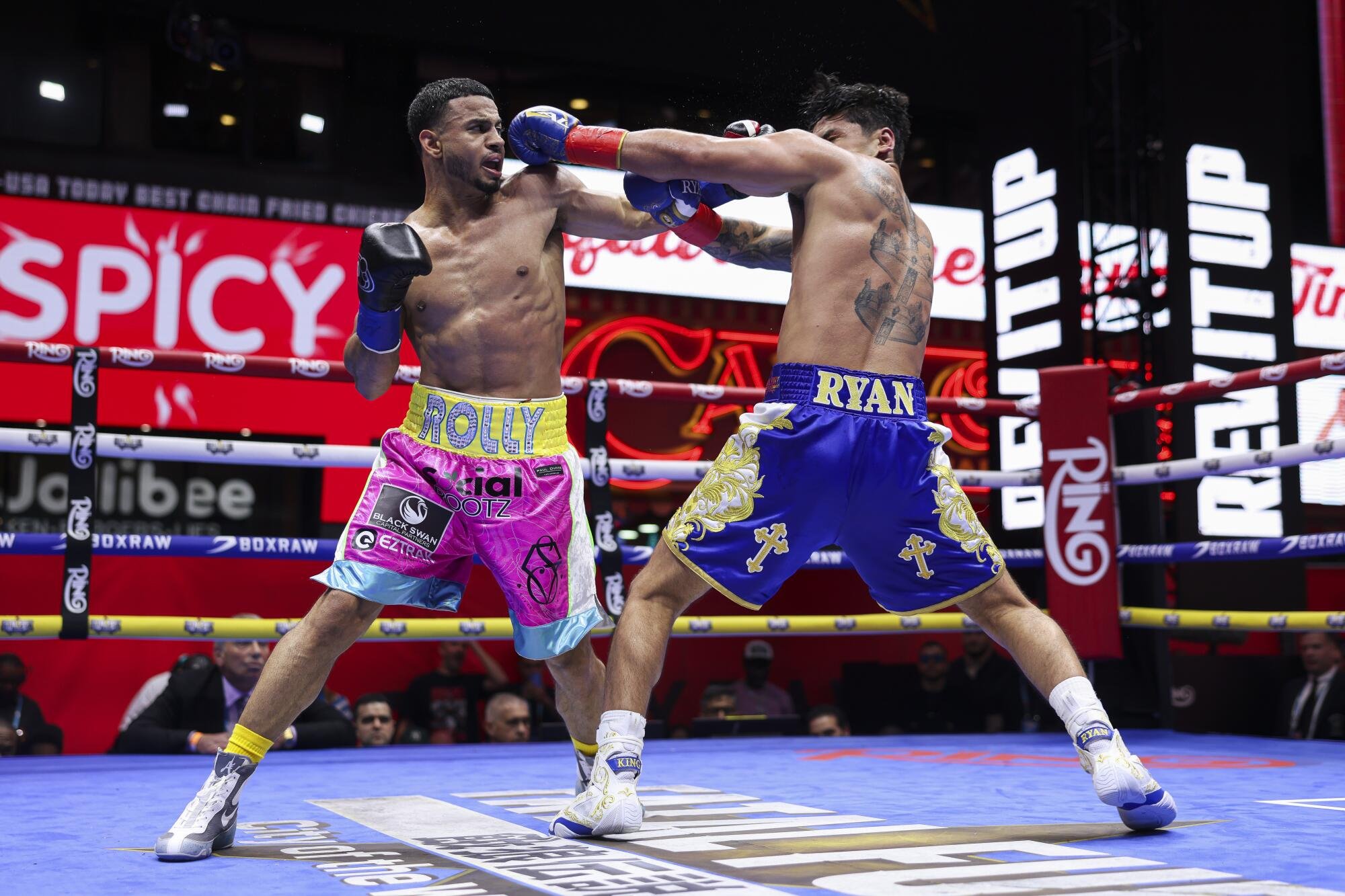
iVB is at the forefront of Live- Sports Entertainment, delivering World Championship Boxing Events that set new global standards.
We specialise in staging history-making moments that combine elite competition with large-scale spectacle, broadcast to billions worldwide.
iVB MISSION STATEMENT.
iVB Sports Media Ltd. plans to package 12 boxing events annually. We envision that half of these events will take place in major stadiums or comparable venues and half will be held at smaller sites. Half of the events will be contested in the United States and half in Europe.
iVB is committed to giving the public competitive fights between elite boxers in settings that honor boxing’s best traditions. These events will be designed to create iconic moments and bring boxing back to a place of importance and respect.
iVB will not be a promoter. We will be creating and packaging these events and will be open to working with every promoter.
There was a time when boxing and baseball were America's two national sports and fighters were connected to communities in a meaningful way.
When the Irish came to America in large numbers, John L. Sullivan was their standard bearer.
In the early twentieth century, the Jewish ghettos of New York gave rise to Benny Leonard and Barney Ross.
When Joe Louis began his ring career in 1934, segregation was law in much of the land. There was not a single black person in the United States whose accomplishments were noted regularly in the white press. No black man or woman played a prominent role in the American establishment. Black players were banned by Major League Baseball and the National Football League.
All of Joe Louis's fights encompassed the issue of race. But the stakes were higher for his 1938 rematch against Max Schmeling than for any prizefight ever. Louis-Schmeling II was viewed as a test of freedom and democracy versus Nazi philosophy and totalitarianism. It was the clearest symbolic confrontation between good and evil in the history of sports. It was also the first time that many people heard a black man referred to simply as "the American."
Rocky Marciano was embedded in the consciousness of Italian-Americans in the same way that Joe Louis lived in the hearts of his people. To the community, Marciano was "one of us."
We could spend days chronicling the importance of Muhammad Ali. In addition to being one of the greatest fighters ever, Ali was a symbol of hope for oppressed people around the world.
History is better than hype. The history of these men is real. They didn’t just reflect their times. They helped shape them.
A boxing fan in Baltimore recently wrote, “Boxing was always an escape from poverty and hard times. It was a chance to get out from under the hardships of life, to be somebody without being an idiot. Boxing bled back into the communities it came from. The fighters gave guys like me a little hope, some confidence. I wasn't in the ring or doing roadwork. But it gave me the push I needed to get up in the morning. It gave me the strength to walk onto the job site and bust it up for eight or ten hours, five or six, sometimes even seven days a week. The fighters brought something good and decent out of me. I felt a connection to them and their mentality, their grit and determination, their refusal to give in. They were an escape for me. Not an escape with a bottle or a pill. An escape by watching other men overcome all the trials that can bring a man down. In a world that told them they were born to lose and would never amount to anything, two men gave all they had in the ring because they couldn’t live with themselves if they lost. That was special.”
That link between boxing, the people, and the communities we live in has been lost. We want to bring it back again.
On July 11, iVB will be in San Francisco for an iconic event. The largest audience ever for a prizefight came together on August 16, 1941, in Milwaukee’s Juneau Park when 135,132 people watched Tony Zale defeat Billy Pryor. We intend to break that record.
iVB will be about boxing, communities, and people; not about us. We’re not selling a brand. We don’t want to build an empire or dominate boxing. We want to bring good fights to the people and present our events in a way that encourages people to think in terms of tradition and classic values.
We can’t promise boxing fans another Joe Louis or Muhammad Ali. Giants of that magnitude spring organically from the soil of their times. But we can promise boxing fans that we will respect boxing’s best traditions. We will put together events that reaffirm the ties that once bound boxing to The People and to the communities that people live in. We will honor boxing’s storied past and do everything in our power to create new iconic moments that encourage a sense of unity among people and respect for the sport.